Profile: Gamers Who Turned Pro Athletes
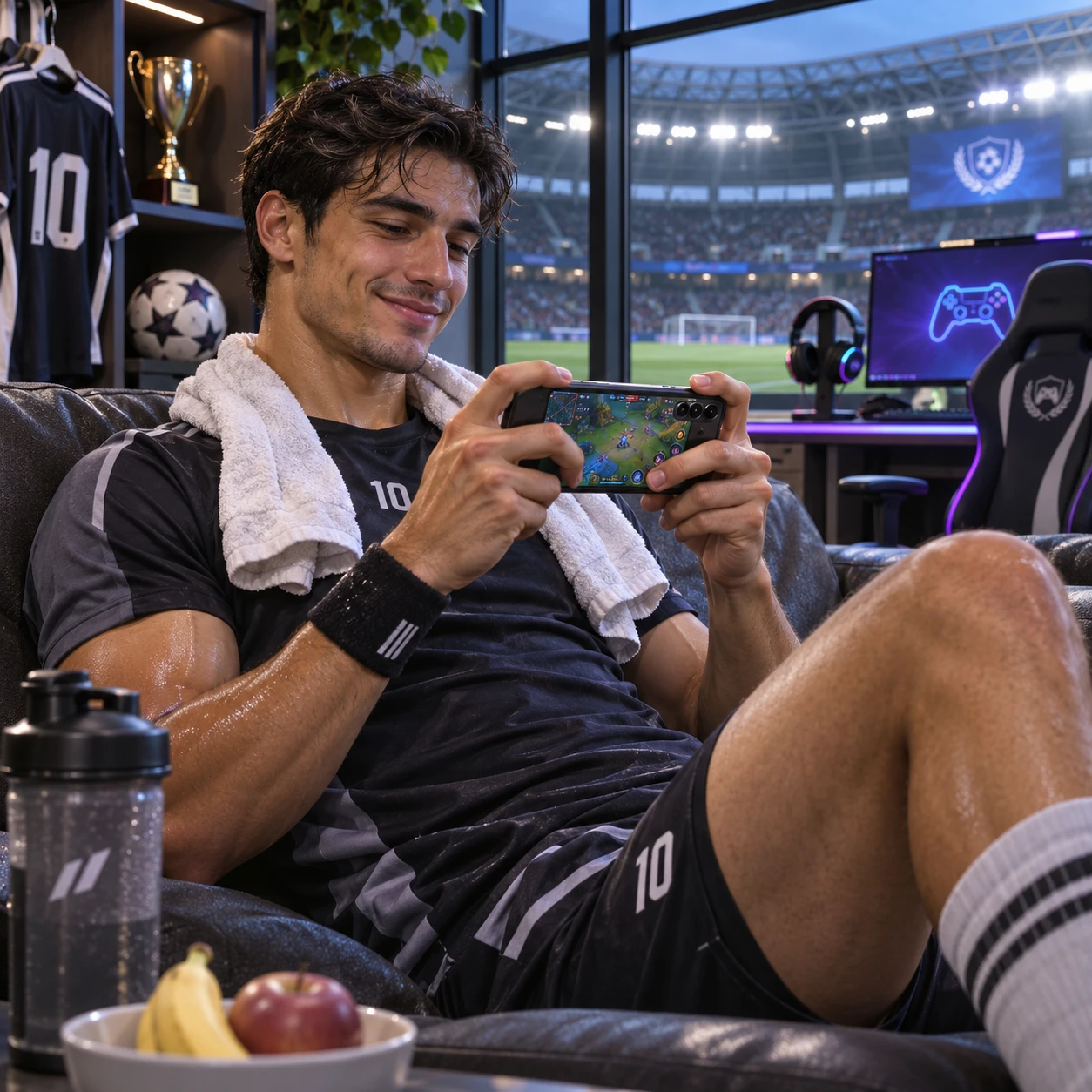
Gaming and professional sport both reward focus, competition, and decisions made under pressure. But a gamer who becomes a pro athlete is an unusual story, not a standard career route. For most athletes with gaming interests, video games are a hobby alongside years of physical practice.
That distinction matters. Hand-eye coordination, reaction time, and strategic thinking can feel relevant across both worlds, but they do not explain an athlete’s success on their own. The profiles and practical takeaways below show where gaming and sport overlap, and where the comparison ends.
What Does “Gamer Turned Pro Athlete” Mean?
A “gamer turned pro athlete” is someone who played video games before or alongside a career in traditional sports. The phrase usually describes an athlete’s personal interest, not a direct pathway from esports to professional competition.
There are several different stories hidden in the label. Some athletes played games as children and later pursued sport. Others competed in esports or streamed games while already training as athletes. A smaller group has moved between esports and traditional sports, but that is different from claiming that gaming caused their athletic success.
It also helps to distinguish gaming experience from organized esports competition. Playing a mobile game in a spare moment is not the same as following a team practice schedule, competing in tournaments, and training at elite level. Both can involve competition, but the demands and outcomes differ.
So, this profile is best read as a look at athletes who have a documented connection to gaming, not evidence that video games are a reliable route into professional sport.
Profiles of Athletes with Gaming Backgrounds
Several professional athletes have publicly discussed gaming as part of their lives, though their experiences do not establish a direct link between gaming and sporting ability. These examples show how a gaming interest can coexist with a demanding athletic career.
Gordon Hayward: NBA player and longtime gamer
Gordon Hayward has spoken publicly about his interest in video games and esports. During his NBA career, he was associated with competitive gaming and appeared in gaming-related events. His story is a clear example of an athlete maintaining a serious gaming interest alongside professional basketball.
Hayward’s sporting career, however, was built through basketball development: practice, coaching, physical conditioning, and competition. His gaming background gives fans a glimpse of his interests beyond the court; it does not prove that gaming made him an elite player.
Damian Lillard: basketball, gaming, and competition
NBA star Damian Lillard has also discussed gaming and has participated in gaming-related events, including basketball-themed esports competition. That connection makes sense for a player whose public identity includes a strong competitive streak, but playing a basketball video game is still different from playing in the NBA.
The overlap is clearest in attitude: both settings involve opponents, tactical choices, and performance under pressure. The physical skills and preparation required on a court remain specific to basketball.
Antoine Griezmann: a footballer with a visible gaming hobby
French footballer Antoine Griezmann has publicly shared his interest in video games, including playing and streaming games during his career. His example reflects a familiar modern pattern: a professional athlete uses gaming for entertainment and connection with fans while continuing to train and compete in football.
These profiles show different levels of involvement, from gaming as a personal hobby to participation in organized gaming events. They are useful examples of athletes who game, rather than proof that esports competition routinely produces professional athletes.
Skills That Can Carry from Gaming to Sport
Some gaming habits may support skills used in sport, especially quick decisions, pattern recognition, and composure. Their value depends on the game, the sport, and the athlete; transfer is possible, but not automatic.
In a fast-paced game, players often track several moving elements, anticipate an opponent’s choice, and respond with limited time. Those demands have a loose parallel in sports such as football, basketball, and tennis, where athletes read changing situations and choose an action quickly. A gamer may already enjoy that kind of decision-making.
- Reaction time: Rapid responses matter in both gaming and sport, though physical movement, distance, and fatigue change the challenge.
- Pattern recognition: Recognizing an opponent’s habits can help a player anticipate likely actions.
- Strategic thinking: Games encourage planning, adapting tactics, and considering trade-offs.
- Competitive mindset: Ranked play and tournaments can teach players to handle wins, losses, and pressure.
- Hand-eye coordination: Games may involve precise visual and motor responses, but controller or touchscreen movements do not substitute for sport-specific coordination.
These are potential overlaps, not a performance guarantee. The University of Rochester’s research on action video games has examined attention and visual processing, but findings about particular cognitive tasks should not be treated as proof that gaming improves professional athletic performance. The university’s overview of this research provides useful context without settling the question of athletic transfer.
What Gaming Can’t Replace
Gaming cannot replace physical conditioning, sport-specific practice, coaching, or the years needed to develop as an athlete. Professional sport depends on the body performing under real movement, contact, fatigue, and competition.
A game can simulate tactical choices, but it cannot recreate the physical load of sprinting through a match, maintaining balance against an opponent, or repeating precise movements while tired. A mobile game may sharpen familiarity with a screen-based challenge; it does not train a footballer’s first touch or a basketball player’s defensive footwork.
For aspiring athletes, the trade-off is straightforward: gaming can be restorative and enjoyable, but time spent playing is time not spent on sleep, recovery, or training if it pushes those priorities aside. Coaches also provide feedback that a game cannot offer about an athlete’s posture, technique, conditioning, or decisions in a real match.
One common mistake is to assume that high-level gaming means an athlete already has the reaction time or focus needed for a sport. That overlooks the sport’s physical and technical demands. The correction is to treat any gaming-related strength as a possible support, then build the actual sport skills through coaching and deliberate practice.
How Mobile Gaming Fits into Athletes’ Lives
Mobile gaming can fit into an athlete’s life as short-form entertainment, a social connection, or a way to unwind. Its convenience is useful, but it still needs boundaries around training, sleep, and recovery.
A phone makes gaming easy to access while traveling, waiting between commitments, or relaxing at home. Multiplayer games can also give teammates and friends a low-pressure way to stay connected. Some athletes choose mobile games because they can play in brief sessions rather than setting up a console or computer.
That convenience has a downside: a quick session can become longer than planned, and late-night play can compete with sleep. The best routine is the one that respects the athlete’s schedule. For example, a player might set a stop time before bed and keep games out of the window reserved for warm-ups, treatment, or team meetings.
Gaming is not automatically a recovery tool. For one athlete, a relaxed session may help them switch off; for another, a competitive match may increase frustration or keep them mentally keyed up. The athlete’s response matters more than the label placed on the activity.
Lessons for Aspiring Athletes and Gamers
Aspiring athletes and gamers can enjoy both interests, but they should build their plans around sport-specific training, recovery, and honest priorities. Gaming may complement a routine; it cannot stand in for the work required to compete.
Use a simple filter when deciding whether gaming fits your week:
- Protect the essentials: Schedule training, school or work, meals, and sleep first.
- Choose a realistic session: Set a time limit that leaves enough room for recovery and the next day’s commitments.
- Notice the effect: If gaming helps you relax, keep it. If it disrupts sleep or leaves you distracted, change the timing or duration.
- Build sport skills directly: Ask a coach for one technical or tactical focus, then practice it in the sport itself.
Do not choose a sport simply because it seems to reward a gamer’s existing abilities. Try activities, get qualified coaching, and pay attention to what you enjoy enough to practice consistently. Competitive mindset can help in many fields, but sustained progress comes from showing up for the specific demands of the one you choose.
The most accurate profile of a gamer turned pro athlete is usually a person with two interests, not a person who discovered a shortcut. Gaming can bring enjoyment, community, and sometimes useful mental habits. Traditional sport still asks for its own years of physical development and disciplined work.