The Best Casual Sports Games for Quick Play Sessions
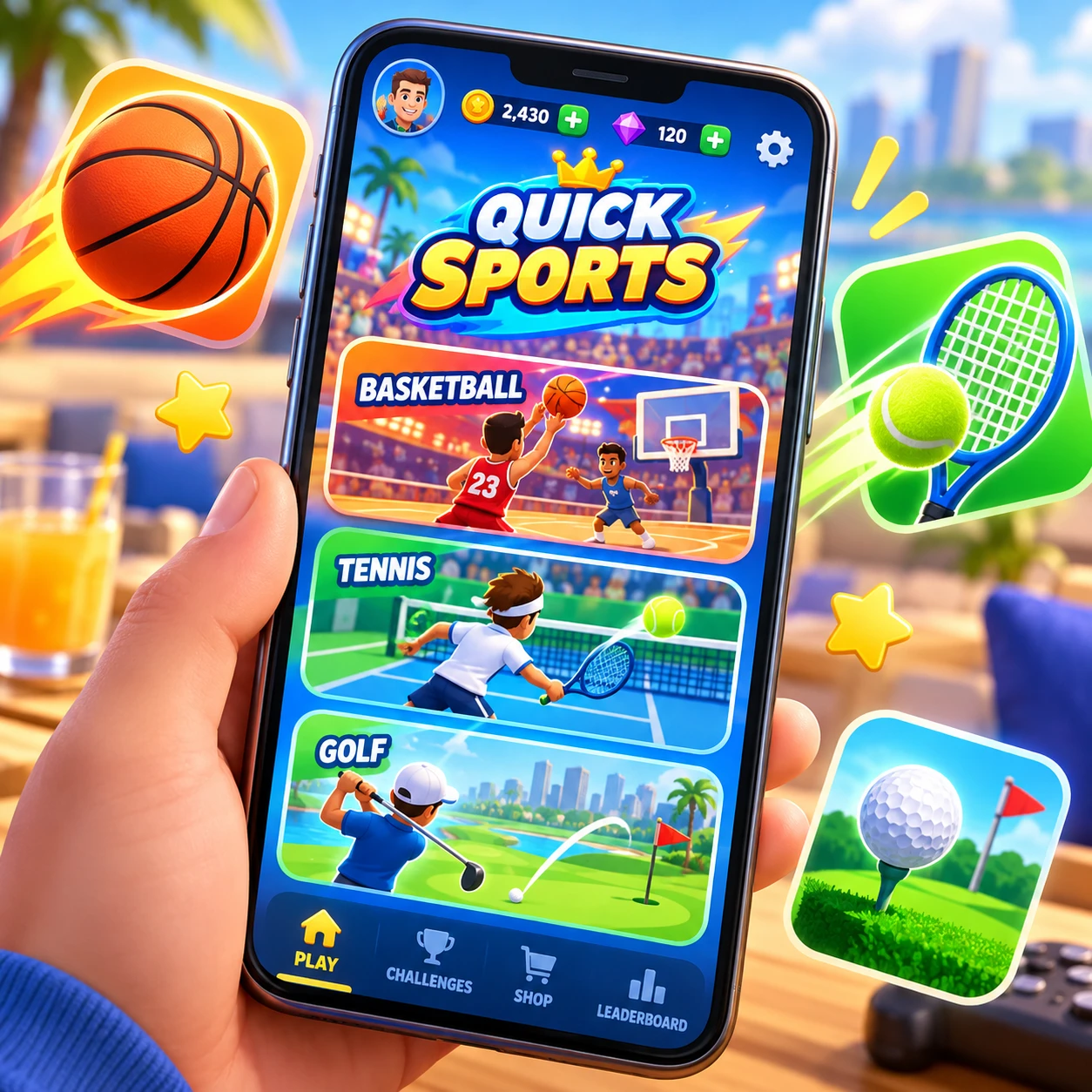
A good sports game can fit into a coffee break, a commute, or the few minutes before your next task. The best casual sports games make it easy to jump into a match, understand the controls, and put the phone down without losing track of a long campaign.
Mobile sports games cover everything from arcade action to simplified takes on basketball, football, tennis, and golf. The right choice depends on how much time you have, whether you want solo play or multiplayer, and if you need the game to work offline.
What Makes a Sports Game Good for a Quick Session?
A sports game works well for a quick session when its rounds are short, its controls are easy to learn, and you can return after a break without having to remember a complicated plan. Those features make each game feel complete, even if you only play for a few minutes.
Start with the match format. A single contest, point, or challenge should have a clear finish, rather than requiring a long tournament or career commitment. Session times vary by game and mode, so check whether a match can realistically fit into your available break.
Simple controls matter just as much. Touchscreen actions such as tapping to shoot or swiping to aim are usually easier to pick up than combinations of virtual buttons. The trade-off is that streamlined controls can reduce tactical depth; a game may be accessible without offering the same precision as a sports simulation.
Look for easy re-entry, too. Helpful tutorials, clear objectives, and forgiving early levels let you resume play without relearning the rules. A strong pick-up-and-play game gives you something satisfying to do right away, while still leaving room to improve.
Arcade Sports Games for Instant Action
Arcade sports games offer fast, simplified versions of familiar sports, often emphasizing immediate action over realistic rules. They are a natural fit when you want a quick match and minimal setup.
In an arcade-style basketball game, for example, the focus might be on timing a shot or scoring against a short countdown. Arcade football may reduce a full match to a few decisive plays, while a racing-style sports challenge might ask you to beat a target score. These formats can make the sport easy to recognize without requiring detailed knowledge of tactics or player roles.
Check what the game simplifies before settling in. Some arcade games use exaggerated physics or power-ups to keep matches lively; others retain familiar scoring while shortening play. Neither approach is automatically better. Choose a playful, unpredictable style if you want quick variety, or a closer-to-sport ruleset if you enjoy learning timing and strategy.
On mobile, pay attention to the amount of tapping and the placement of controls. A bright interface can look inviting but still feel cramped on a small screen. Try a tutorial or one match first, and see whether the game remains comfortable to play one-handed or in short bursts.
Casual Games Based on Traditional Sports
Casual games inspired by traditional sports keep recognizable goals, such as making a basket, winning a tennis point, or sinking a golf putt, while trimming the time and complexity. They suit players who want a familiar sports feel without a full simulation.
Basketball games may center on shooting drills, brief one-on-one contests, or timed scoring rounds. Football games can focus on penalty kicks, passing challenges, or short matches. Tennis often works well as a series of quick points, while golf lends itself to bite-sized holes or single-shot accuracy challenges.
These formats give you a satisfying link to the real sport, but they do not all deliver the same kind of play. A golf game may reward careful aim and patience; a football challenge may be all about fast reactions. If you prefer sports knowledge to reflexes, look for games that let you make choices about positioning or shot selection.
Check whether the game offers a practical way to play without a constant connection. Some modes may be available offline while events, leaderboards, or online matches require internet access. That distinction matters if you plan to play during travel or in places with unreliable service.
Solo Challenges and Progression
Solo challenges are a good fit for short play because they give you a clear goal without requiring an opponent or a long match. Progression adds a reason to return, as long as it rewards practice rather than demanding daily play.
Useful short-session modes include target practice, time trials, trick challenges, and score attacks. Each gives you a focused task: hit a target, beat your previous result, or complete a set of attempts. A run can feel complete even if you have only a few minutes.
Skill progression can come from learning when to release a shot, improving aim, or choosing a better moment to pass. In a well-designed casual game, your own decisions become more effective as you play. Unlockable equipment or cosmetic rewards can add variety, but they are not a substitute for controls that feel responsive.
Look closely at how progression is paced. A series of optional goals is usually easier to fit around a busy schedule than a system that relies on long sessions, frequent logins, or repeated grinding. If the next upgrade feels necessary just to compete, the game may be less relaxing than its casual label suggests.
Multiplayer Games for Quick Competition
Multiplayer sports games can turn a short break into a lively head-to-head contest, especially when matches start quickly and finish cleanly. For a better experience, look for clear matchmaking, reliable connections, and modes that do not punish you for leaving after a completed round.
Real-time multiplayer lets you test your timing against another person, but it depends on a stable connection and an opponent being available. Asynchronous play, where players take turns or compare completed scores, can be more flexible when schedules do not line up. Local multiplayer is another option when friends are nearby, though it depends on the game supporting it.
Before joining a match, check whether the game separates newcomers from experienced players or uses rankings to find similar skill levels. Good matchmaking cannot guarantee an even contest, but it can reduce the frustration of repeatedly facing far stronger opponents. Connection quality matters as well: in a fast tennis rally or shooting contest, lag can make a fair match feel random.
For quick competition, a short match with a definite end is more practical than an open-ended lobby. Be cautious with modes that require uninterrupted play if you are likely to be interrupted. A brief, friendly loss is easier to shrug off than being penalized for leaving mid-match.
How to Choose the Right Game for Your Routine
Choose a casual sports game by matching its session length, connection needs, control style, and sport to your real routine. A simple check before downloading can save time and help you find a game you will actually open.
- Measure your break: If you have only a few minutes, prioritize a single challenge, short round, or quick match. Check the mode itself, since some games also include longer tournaments.
- Decide on connectivity: For commutes or travel, confirm whether solo modes work offline. Online multiplayer and live events usually need an internet connection.
- Test the controls: Look for intuitive touch input and readable buttons. Try a tutorial before investing time in progression.
- Pick your preferred pace: Arcade sports games favor speed and spectacle; traditional-sport casual games may reward aim, timing, or tactical choices.
- Set a progression limit: Choose optional goals and skill-based rewards if you want steady improvement without turning a quick break into a daily obligation.
A practical rule is to prioritize the feature you cannot compromise on. If offline play is essential, filter for that first. If competition is the point, check matchmaking and connection requirements before judging a game by its screenshots. The best option is the one that fits your available time, not the one with the longest list of modes.
Frequently Asked Questions
Casual sports games are usually designed for accessible controls and flexible play, but the details vary by title and mode. These answers can help narrow down what to look for.
What makes a sports game casual?
A casual sports game is easy to start and play without a large time commitment or extensive rules knowledge. It often uses simple controls, short matches, or focused challenges, while still offering room to improve.
Are quick-play sports games suitable for offline play?
Some are, especially those with solo challenges or practice modes that do not rely on live opponents. Offline access varies, so check the game’s mode descriptions and test it without a connection before depending on it during travel.
Which sports games work best for short breaks?
Arcade basketball, football skill challenges, tennis points, and golf shot or putting challenges can all work well because they can be divided into short rounds. The best choice depends on the game’s actual match length and how quickly you can start a session.
Can casual sports games still offer skill progression?
Yes. You can improve timing, aim, positioning, and decision-making even when controls are simple. Look for practice modes, optional challenges, or score records that reward learning rather than requiring long sessions.